Foot Pedal
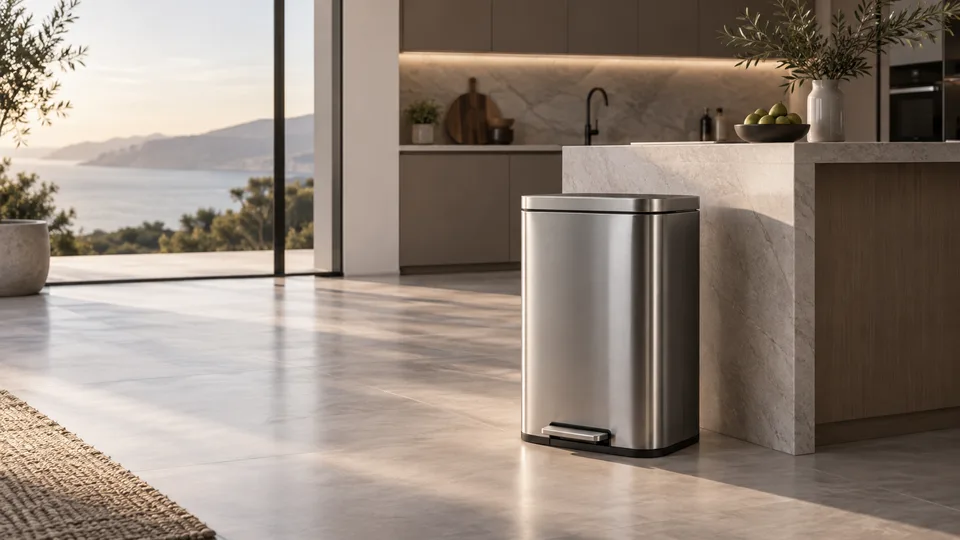
The visible front pedal provides foot-operated access to the lid.
 Temporary imageTemporary imageTemporary imageTemporary image
Pedal Waste Bins
AKA Hilux Pedal Bin pairs a steel body with a dark lid and a contrasting pedal at the base. The catalog provides top, side and pedal views, showing how these details form a consistent design across the size range.
All available colors and finishes have a fingerprint-resistant surface.
Specifications
AKA Hilux Pedal Bin pairs a steel body with a dark lid and a contrasting pedal at the base. The catalog provides top, side and pedal views, showing how these details form a consistent design across the size range.
The catalog specifies a soft-close lid and a removable inner bin. Pedal operation allows opening by foot, while the inner bin can be lifted out for emptying and cleaning. Leave room above the lid and in front of the pedal when planning placement.
Steel, matte black and gold champagne are shown as exterior options. Compare the selected color with surrounding finishes and identify the required capacity from the existing size table. Include both in your request to AKA for model-specific information.
The pedal is part of the space that this bin needs, not merely a detail on its front. Position the body so that a foot can reach the pedal without twisting around a cabinet, chair or door. Check the whole opening movement before choosing a permanent position. A bin that fits when closed can still be inconvenient if the lid touches a worktop above it. In a row of matching bins, leave each pedal independently accessible. These checks help you choose a usable position without assuming that every size has the same operating clearances.
Start with the amount collected between emptying rounds and the room available for the body. A larger nominal capacity may reduce how often the container needs emptying, but it also changes the space occupied and the handling of the filled container. A smaller version may suit a secondary collection point even when a larger bin serves the main work area. Compare the individual rows in the size table below; use the selected variant’s actual dimensions rather than scaling a photograph or extrapolating from another size.
Compare the lid outline, pedal shape, base and proportions when choosing among AKA pedal bins. These are useful distinctions even when two models share a capacity or exterior color. A soft-close lid and removable liner are separate specifications: use the feature list for this exact product to establish whether either is included. Foot operation alone does not establish a motor, sensor, air-tight seal or a particular internal mechanism. For a coordinated set, identify the family and the full size row rather than using only the description “steel pedal bin”.
Consider both ordinary use and the less frequent task of changing the liner or emptying the container. Leave an unobstructed route to the bin and enough space to reach the upper section. Where the specified model has a removable inner bin, check the space needed to lift it out. Where that detail is not specified, ask AKA about the internal arrangement before planning the handling routine. When positioning the bin in a furnished room, review door swings, the standing position of the user and access for cleaning around the base.
Steel / Matte Black / Gold Champagne
The options above are the documented exterior choices for this record. Screen swatches are an indication, not a physical color standard. Where a combination names both body and top, keep the complete name in your selection. Availability of a particular combination for a particular size can be confirmed with AKA sales.
The size table on this page is the reference for the variants recorded under this model. A capacity field and a dimension field answer different questions: capacity is a volume, while dimensions describe the physical space occupied. Keep the complete size row when comparing products. If a row contains an original dimension string without named axes, retain that string in the inquiry and ask for the corresponding technical drawing when necessary. Do not rearrange the numbers based on how tall or wide the product appears in a photograph. Fields that are not specified should not be treated as zero.
Think about the route people take through the room, the objects beside the product and the practical access needed for its normal use. A product that looks balanced in a staged photograph may need a different position in your own layout. For a project with several units, make a short list of positions and assign the model and size to each. Evaluate placement suggestions against the actual waste stream or accessory use; they are planning guidance rather than a technical certification for every environment.
Fingerprint resistance is a shared surface property of the AKA range. It does not remove the need for routine cleaning or mean that the surface can never show marks. The visible result also depends on light and viewing angle: reflections on a steel or gold exterior can make a photographed surface appear brighter or darker. When matching several items, review them in the intended lighting and confirm the exterior combination. Keep surface properties separate from color names and from any unverified claim about the alloy grade.
Follow the care instructions supplied for the exact product and finish. For routine exterior care, use a soft, clean cloth and a cleaning method confirmed as suitable for that surface. Avoid abrasive treatment or experimenting with strong products when compatibility has not been established. Pay attention to the rim, base and areas touched during normal use. Treat removable components according to their own instructions, and do not assume that a lid assembly or other mechanism can be immersed simply because the body has a steel appearance.
A clear inquiry helps distinguish similar products and reduces the need for follow-up questions. Include the model name, selected size row, exterior color combination and the number of units required. Add the intended position and any clearance restriction that may affect the choice. If your project requires a specific technical property, list it as a requirement to be confirmed rather than assuming it from a photograph. The product inquiry link carries the selected options to the contact page; review them before sending the message.
Request product information or a catalog from AKA sales. Include your selected model, size and color so the team can respond to the exact version you are considering. For projects, add the required quantities and any installation constraints. This website introduces the collection and receives inquiries; product selection continues through direct contact with AKA.
The visible front pedal provides foot-operated access to the lid.
The catalog shows the inner container separately for removal and emptying.
The Hilux catalog page specifies a stain-resistant coating; this is not a stain-proof guarantee.
The documented soft-close mechanism moderates lid closing.
A surface property shared across the AKA collection. Routine cleaning is still necessary.
| Size | Outer dimensions |
|---|---|
| 5L | 27cm×20cm |
| 12L | 39cm×25cm |
| 15L | 36cm×29cm |
| 20L | 45cm×30cm |
| 25L | 56cm×30cm |
| 30L | 66cm×30cm |
Temporary imageTemporary imageTemporary imageTemporary imageCheck the feature list for the selected model. A pedal by itself does not establish soft-close operation.
Compare the complete size row with the available position. Capacity alone does not establish height or footprint.
Use the listed exterior choices. Confirm an actual sample if matching the shade precisely matters.
No. It is a surface property; routine care remains necessary according to the supplied instructions.
Select the size and color, then use Request Information. Review the selected options on the contact page before sending.
AKA · Contact sales
For product selection, project requirements and wholesale enquiries, talk to the AKA team.
Request project information