Cylindrical Body
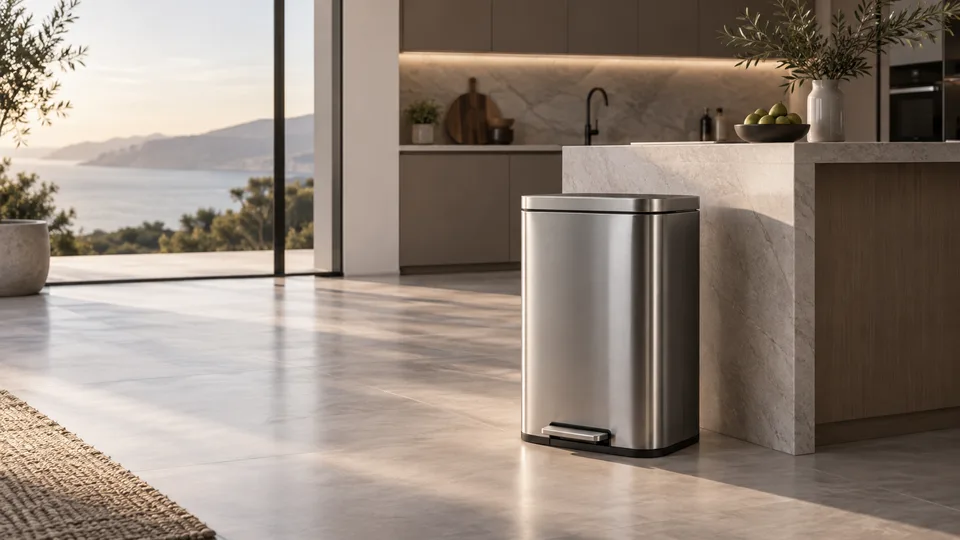
A round body profile is visible in the product reference.
 Temporary imageTemporary imageTemporary imageTemporary image
Open-entry Waste Bins
AKA Cup Bin has a domed upper section with an opening in its front. This rounded hood gives the cylindrical bin a different profile from the angled Shoot model and the flat-topped Touch and Slide models.
All available colors and finishes have a fingerprint-resistant surface.
Specifications
AKA Cup Bin has a domed upper section with an opening in its front. This rounded hood gives the cylindrical bin a different profile from the angled Shoot model and the flat-topped Touch and Slide models.
The front-facing opening makes orientation part of the placement decision. Allow an unobstructed approach to that side and compare the overall height with nearby furniture. The hood shape alone does not establish sealing or odor-control performance.
The size table includes compact and larger variants, with two distinct 30-litre rows. Specify the full size description when contacting AKA. Ask for the opening and internal-container details if these are important to your project.
The opening is a useful starting point when comparing this model with other AKA bins. A fully open top, an inclined entry and a domed front-facing opening create different approaches to the container. Examine the model-specific description and feature list rather than treating these shapes as interchangeable. Position the entry toward the direction from which it will normally be used. Keep furniture and doors out of that approach so that the visible opening remains accessible after the surrounding space is furnished.
Capacity describes nominal volume; it does not, by itself, describe the body’s footprint or height. Review every relevant size row in the table below. Where two entries have the same capacity, their proportions can still differ. Check the actual location with a tape measure and compare those measurements with the recorded dimensions. For several collection points, use the same model family where a consistent appearance matters, while selecting each size according to the space and anticipated emptying routine.
An entry that is already open avoids a separate lid-opening action during disposal. That can be useful where quick access is the main selection criterion. It also means that the shape should be evaluated for the intended waste stream and the visual requirements of the room. An open or hooded appearance should not be interpreted as an air-tight seal, odor-control system or specialized safety rating. If the project requires any such property, ask for a model with that specification explicitly documented.
Before fixing the position, consider how the container will be emptied and how the floor around it will be cleaned. Do not place the bin so tightly between other objects that its upper section or side opening becomes awkward to reach. In a front-opening design, the orientation is especially important; in an open-top design, clear access from above matters. Use the selected size and model name when requesting internal-container information, because an exterior photograph alone cannot establish all of the parts supplied.
Steel
The options above are the documented exterior choices for this record. Screen swatches are an indication, not a physical color standard. Where a combination names both body and top, keep the complete name in your selection. Availability of a particular combination for a particular size can be confirmed with AKA sales.
The size table on this page is the reference for the variants recorded under this model. A capacity field and a dimension field answer different questions: capacity is a volume, while dimensions describe the physical space occupied. Keep the complete size row when comparing products. If a row contains an original dimension string without named axes, retain that string in the inquiry and ask for the corresponding technical drawing when necessary. Do not rearrange the numbers based on how tall or wide the product appears in a photograph. Fields that are not specified should not be treated as zero.
Think about the route people take through the room, the objects beside the product and the practical access needed for its normal use. A product that looks balanced in a staged photograph may need a different position in your own layout. For a project with several units, make a short list of positions and assign the model and size to each. Evaluate placement suggestions against the actual waste stream or accessory use; they are planning guidance rather than a technical certification for every environment.
Fingerprint resistance is a shared surface property of the AKA range. It does not remove the need for routine cleaning or mean that the surface can never show marks. The visible result also depends on light and viewing angle: reflections on a steel or gold exterior can make a photographed surface appear brighter or darker. When matching several items, review them in the intended lighting and confirm the exterior combination. Keep surface properties separate from color names and from any unverified claim about the alloy grade.
Follow the care instructions supplied for the exact product and finish. For routine exterior care, use a soft, clean cloth and a cleaning method confirmed as suitable for that surface. Avoid abrasive treatment or experimenting with strong products when compatibility has not been established. Pay attention to the rim, base and areas touched during normal use. Treat removable components according to their own instructions, and do not assume that a lid assembly or other mechanism can be immersed simply because the body has a steel appearance.
A clear inquiry helps distinguish similar products and reduces the need for follow-up questions. Include the model name, selected size row, exterior color combination and the number of units required. Add the intended position and any clearance restriction that may affect the choice. If your project requires a specific technical property, list it as a requirement to be confirmed rather than assuming it from a photograph. The product inquiry link carries the selected options to the contact page; review them before sending the message.
Request product information or a catalog from AKA sales. Include your selected model, size and color so the team can respond to the exact version you are considering. For projects, add the required quantities and any installation constraints. This website introduces the collection and receives inquiries; product selection continues through direct contact with AKA.
A round body profile is visible in the product reference.
The Cup reference shows a rounded hood with a front-facing entry.
A surface property shared across the AKA collection. Routine cleaning is still necessary.
| Size | Outer dimensions |
|---|---|
| 5L | 36cm×20cm |
| 15L | 50cm×30.5cm |
| 20L | 60cm×30.5cm |
| 25L | 70cm×30.5cm |
| 30L | 80cm×30.5cm |
| 30L | 64cm×36.5cm |
| 40L | 71cm×36.5cm |
| 45L | 81cm×36.5cm |
Temporary imageTemporary imageTemporary imageNo. The model description distinguishes open-top, angled and front-opening forms.
Compare the complete size row with the available position. Capacity alone does not establish height or footprint.
Use the listed exterior choices. Confirm an actual sample if matching the shade precisely matters.
No. It is a surface property; routine care remains necessary according to the supplied instructions.
Select the size and color, then use Request Information. Review the selected options on the contact page before sending.
AKA · Contact sales
For product selection, project requirements and wholesale enquiries, talk to the AKA team.
Request project information